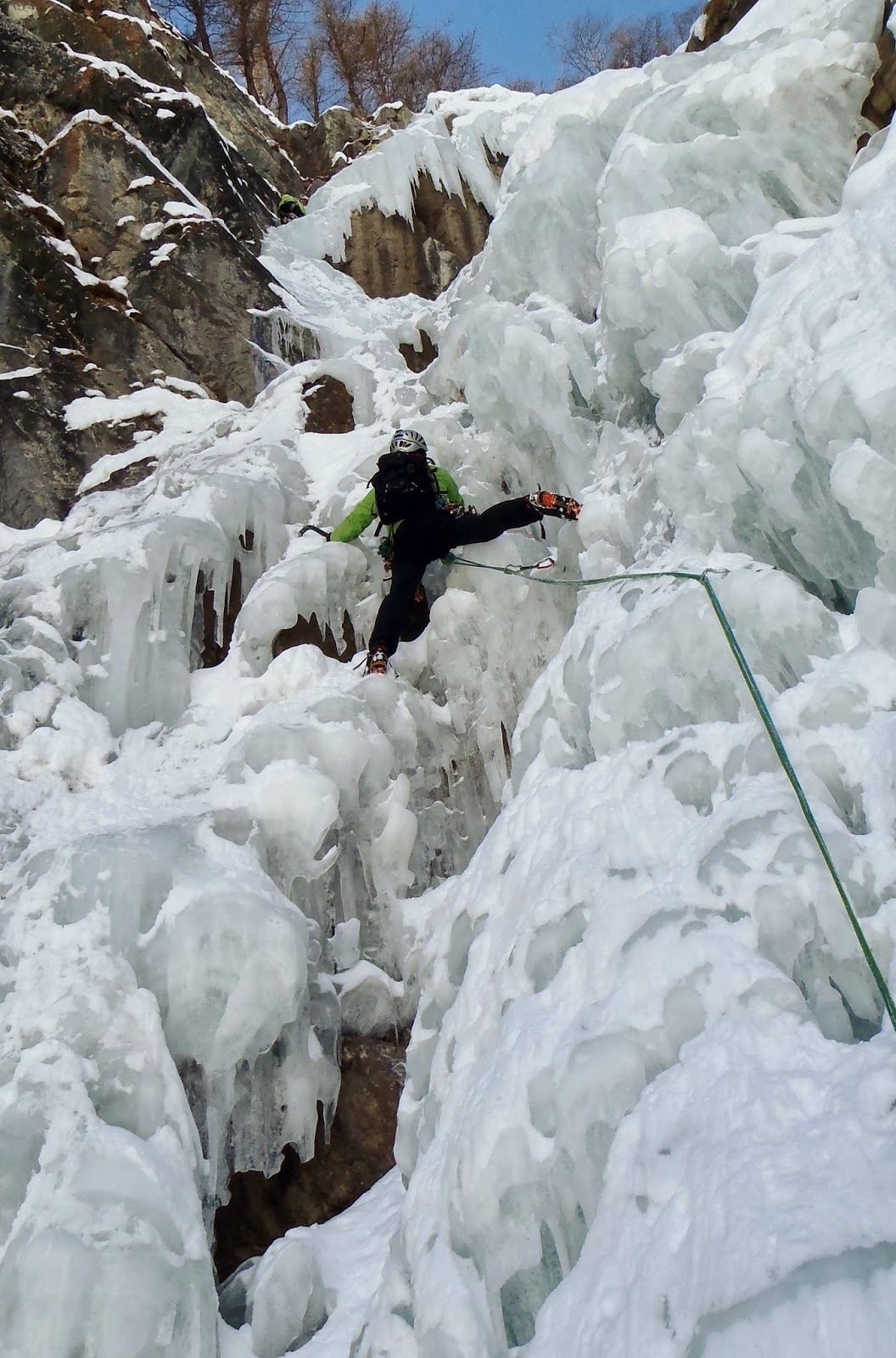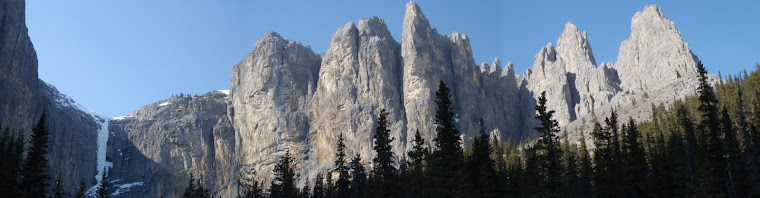
The Sorcerer, Ghost Valley

The Sorcerer, Ghost Valley

Tuesday, 1 April 2014

The FlyCave


Training at the FlyCave

Climbing is one of the most complex sports involving a seemingly endless amount of inter-related components and to be a great all round climber it’s a mistake to focus on just one or two areas. 

The best climbers are the ones who don’t have weaknesses and who make every attempt to keep all the balls in the air. 

Give thought to skills such as your mental performance, technique and tactics and the physical components such as specific strength, endurance, flexibility and general fitness. Let’s also not forget about the food you eat and the amount of it! This has a massive impact on all the above.

The FlyCave 

Also remember that whether it’s indoor or outdoor climbing, it’s not enough to climb only once or twice a week as this won’t be enough to improve your strength and endurance. Three sessions a week is the benchmark which maximises your improvement rate, while also giving you plenty of time for recovery. This, coupled with general fitness training, flexibility sessions and watching what you eat will help focus you to become a better climber.

The Fly Cave has been a great training facility through the winter and now into the spring, helping build my endurance and general strength and conditioning. We’ve now built a 40/45 degree ‘woody’ specifically to build on the strength element of our training and also to build up more power.

 Leo on the new 'woody' down the FlyCave

Now the days are getting longer and the weather’s better we’ll hopefully spend more time outside helping focus on elements such as tactics and the ‘mental performance’ side of climbing.

A winter icefall climbing really helps with the ‘mental’ side of things but there is nothing like getting back on the rock to help pull all this together. And, with a great base of the indoor training over the last few months in the FlyCave, this should be easier!

It doesn’t matter what element of climbing you’re enjoying at a particular time. All the elements need a foundation of training building on these key components, and then time spent actually doing it! And don’t forget, it should be fun! Practise the elements of climbing that you enjoy and not the ones you feel you should!

I remember Miguel Indurain, the famous Spanish Tour du France 5 times winner in the 90’s, being interviewed about turning professional and being told that “Isn’t it great that you will now be able to train twice as hard now you’re a professional”. Indurain’s reply was “Yes, it’s great that I’ve now turned professional but it means that I can now train less!”

 Leo warming up on the blue circuit down the Flycave

Keep the training to a minimum of three sessions a week and keep the sessions focused on what you want the outcomes to be. As I’ve got older I train one session fewer a week, my sessions are a little shorter and much more focused and I’m actually climbing better.

Also remember to keep it fun! Chop and change your sessions regularly and try different things. Mix up your climbing partners and don’t get stuck in a rut, feeling like you are climbing well and feeling strong, when much of it is just ‘muscle memory’. Some great sessions can be following someone else’s routine/session and although this may seem a little easier at first glance, without any muscle memory it can be a great session, and you will feel a massive benefit!

Stay strong

Ade

Thursday, 20 March 2014

A Passion for Mountains

A knock on the door this morning...........it was the post women!
Letters blah, blah and then a very heavy book encased in thick protective cardboard.

I ripped off the cardboard and inside was 'A Passion for Mountains'
The book's been in the pipeline for some 18months now and finally its been published which is very pleasing.


It's a book which documents both personal climbing and mountaineering adventures by members of the British Association of Mountain Guides.

It's edited by Hannah Burrows-Smith and forwarded by Iain Peter published by Hale.

The book starts out by explaining a little about the IFMGA and then giving the reader a brief history about the British Mountain Guides. The book is then broken down into sections and then the chapters are split into personal accounts from British Mountain Guides like myself.

My account is titled 'Haunted by the Ghost'

It's great to now have the book published, pulling together accounts and adventures from other fellow Guides and great to do it in association with the BMG.

Enjoy the read
Ade

Monday, 17 March 2014

Hanwag Sirius GTX boot review


Hanwag Sirius GTX

Sirius, the brightest star in the sky? Well they’re certainly up there with all the major competitors when it comes to high performance mountain boots!


The Sirius GTX boots are ideally suited on both ice and mixed climbing in the winter and summer Alpine terrain, although they are a single boot. They kept my feet warm down to -16 degrees this winter, as long as I was moving. For me, this is bottom end when moving and anything lower in temperature or any more hanging around I’d need to be wearing double boots. I’ve replaced the insole for a more supportive foot bed which through years of guiding and climbing I need in any boot, I wear just one thick sock and in the most part wear short ankle gaiters which just tie in the laces and keep any loose snow out of the top of the boot. The Sirius I would say is a medium to wide fitting with a good amount of room on the toe box.

 
The Sirius is about 1900g for the pair which is similar to the Scarpa equivalent and a little lighter than the Sportiva which are all great boots but all different fits giving you a great choice in finding something that fits and feels great when it comes to shelling out on a new pair of Mountain boots.

The Sirius is a neat fitting high end performance climbing boot with the upper made from soft Bergrind Leather with very few seams meaning a lot more comfort and less rubbing and pressure points. Hanwag uses a special technique, which makes it possible to reduce the number of seams. It sounds simple, but it involves very complex craftsmanship which Hanwag have had experience of for over 90 years!

 
The soft upper allows maximum flexibility in all directions making hiking and walking over easier angled snow /ice slopes in crampons comfortable and allows absolute precision when climbing very steep, technical and fragile ice.

Matched to this the ridged Vibram sole unit which gives you a great platform when front pointing on the steepest of ice and great edging when climbing more mixed rocky ground.
The sole is also cushioned at the heal and fully compatible with a ‘step in’ crampon with a ‘welt’ at the front which accommodates most bails.


The rubber rand which extends around the base of the boot just above the sole unit gives the boot more durably waterproof, gives increased stability and protects the upper so that it lasts longer.

The lacing system includes a ‘Click Clamp’ locking D-ring system which I‘ve found incredibly useful when I really want to crank the boots up tight for the steeper pitches (The D-rings once locked keep the lower part of the lacing system tight while you finish lacing the upper part) 

  
I’ve also found the boots to be incredibly breathable which has kept my feet dry during high activity walking into the icefalls this winter and hence warm feet when you slow down and start climbing and hanging around on the belays.
This must be due to the Gore-Tex lining and tradition leather outer which must breathe more effectively than a lot of the other largely synthetic boots with numerous seams and different panels.

The insulation is Durathrem which coupled with the breathability helps keep the feet warm even on the older days I had in the mountains this winter.


I’ve been used to using a boot with an integral gaiter for the past 10years and initially missed finishing lacing the boot up by zipping up a gaiter over the top which gave me the feeling that the boot was completely weather proof, warm and kept any snow getting in around the laces.

But I needn’t have worried as the Sirius with its high bellowed tongue, warm inner lining and waterproofness made me realise it was just a change of habit and as much of a visual thing as anything and like I say my ankle gaiters kept any loose snow from getting on over the top of the boot and my laces neatly out of the way.

  
They’ve been great boots climbing the ice this winter. Try them on and if they fit your feet, you won’t be disappointed, they even look great!

Ade

Tuesday, 11 March 2014

The Classic Ginat on the North Face of Les Droites

The Ginat IV 5, 1000m on the North Face of Les Droites

FA 24 July 1978 by Jean Ginat, Gilles Modica, Jean-Pierre Simond and Jean-Marc Troussier
Note - Jean Ginat died during the descent to the Glacier de Talefre 

The Ginat on the North Face of Les Droites

The Ginat on the North Face of Les Droites

Topo

Route - The Ginat
Grade - IV 5 (TD)
Length - 1000m
Mountain - Les Droites
Aspect - North Face
Approach - from the Argentiere Hut

After crossing the Bergshrund you have 2 options, if conditions permit head straight
up the ice runnel to the bottom of the central icefield (sections of 80 degrees and
about 200m) or head rightwards into the large gully and from the top of this head out
leftwards via the ‘Messner Ramp’ (sections of 80 degrees and often mixed climbing).
If the the Ginat is in condition then the ‘Messner Ramp is the reliable option.

The Central icefield is about 350m in height after leaving the ‘Messner Ramp’ and is about 60 degrees

At the top of the icefield you climb the crux which is a steep 85 degree exit pitch taking the left most of the 3 exit gullies.

From the top of this pitch climb directly up and right over 80 degree mixed terrain to reach a small icy bay. Continue up from here climbing short steep sections of ice/mixed terrain for about 200m

Then climb the final steep exit pitch (up to about 85 degrees) which leads up to the obvious snow couloir and on to the ‘Breche des Droites’ (about 100m)


Descent

From the ‘Breche des Droites’ follow the steep gully directly down the south side via about 8 abseils to the first section of glacier. From here head down and left meeting up with the upper Talefre Glacier via an abseil from rocks on the lefthand side.


A - Ginat IV 5 1000m

B - NE Face of the Signal Vallot III AD 750m
 
C - Au Coeur Du Monde III D 700m

D - NE Couloir IV 4 1000m

E - Fynn-Goudet Route IV D 1000m

Inspiring and a great late spring early season route when in condition.

Safe climbing

Ade