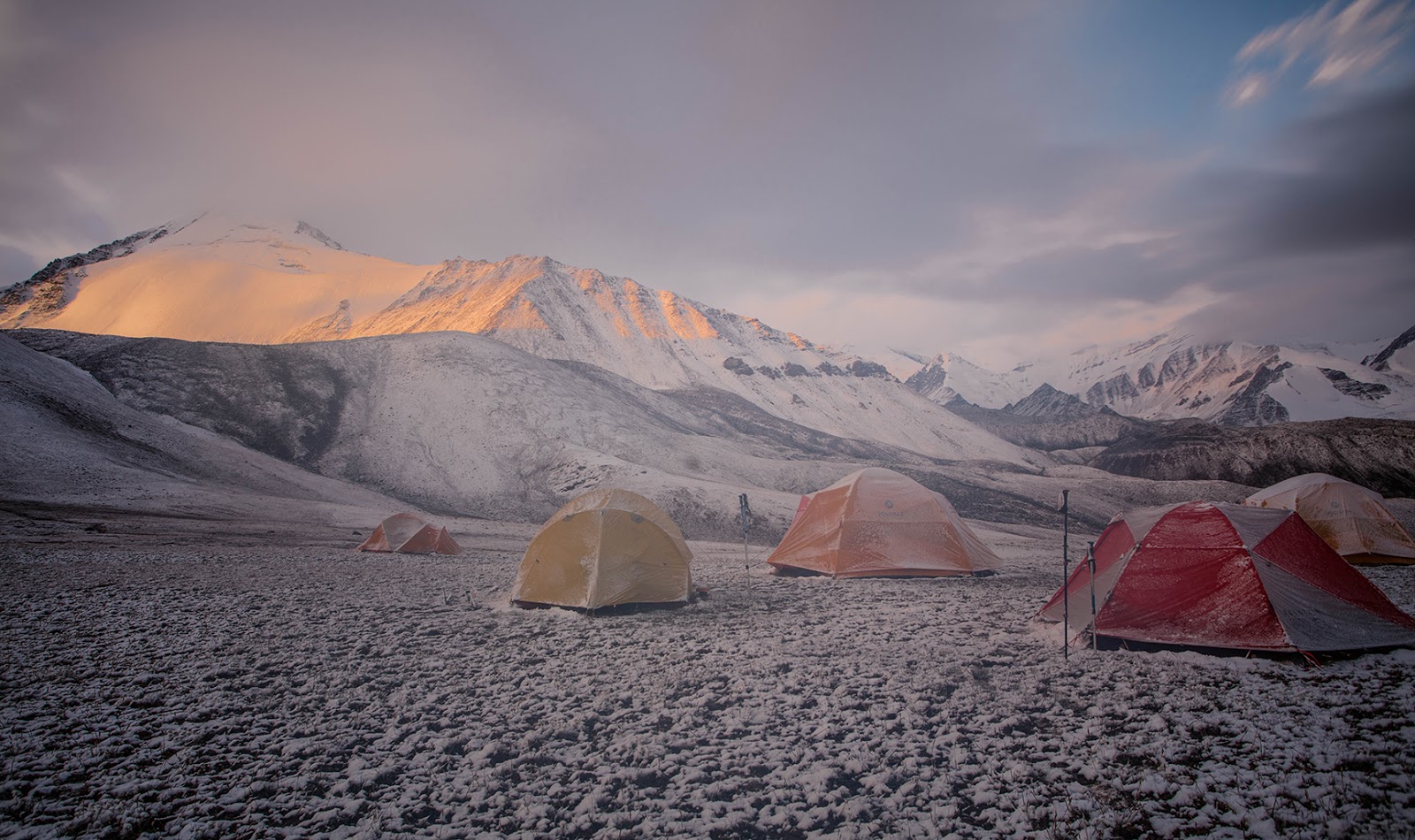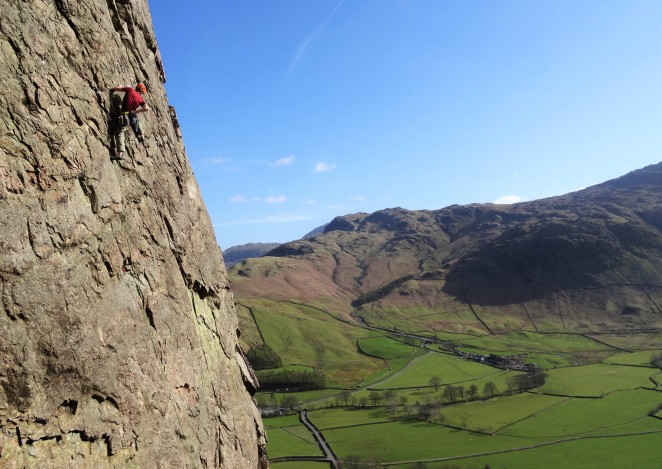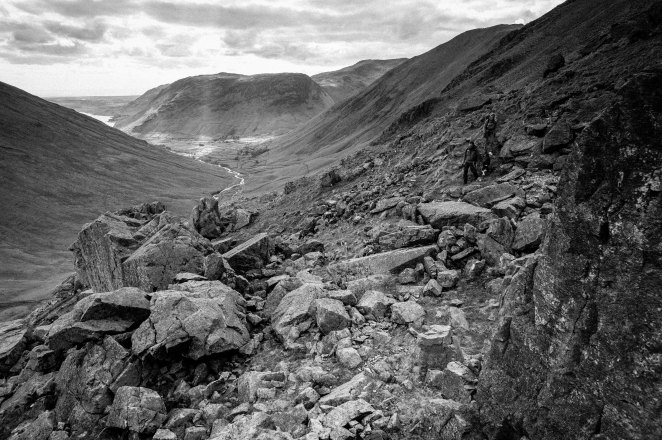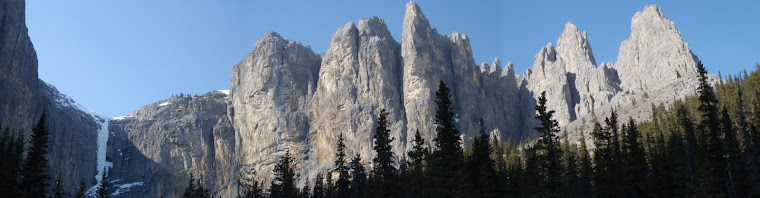
The Sorcerer, Ghost Valley

The Sorcerer, Ghost Valley

Friday, 17 November 2017

Alpine Ice Climbing


As the autumn leaves fall, the days shorten and the temperature drops. Streams slow down, any precipitation falls as snow, blanketing the mountainside and streaks of blue- white ice start to form, marking out potential lines for the coming season.
These complex, intricate structures of crystalized ice build over time as the temperature continues to fall. It needs to be a gradual process and it’s at this point we start to tune into what’s going on in the Alps. A plummet in temperature for a week and the ice stops building, the ice may look great but there’s no structure to it. It’s brittle and has little to support itself. If it stays brutally cold, then perhaps the lower venues, where it’s a few degrees warmer will start to come good. Too warm for too long, then it’s a late bloomer with many of the lower venues possibly not even forming at all and climbing at a high venue where it’s colder is key. A dry autumn with no snow means it could be a lean season with little seepage and only the main water courses coming into condition early on. Early snow may offer a good feed to many of the ice routes if you get a good melt-freeze cycle of weather.
Every season is different and that’s what makes climbing the frozen waterfalls so special. Conditions change year to year and even day to day, so understanding how the ice has been formed, what the weather has been like over the past weeks before you head out and what’s going on in the ‘here and now’ is key. Temperature is the biggest factor to the quality of ice and how safe the icefall is. Be mindful also of the snow that’s built up on slopes above the icefall. The sun impacting that snow, the wind that cross-loads any bowls or gullies you may be climbing, both before and on that day. Don’t plan too far ahead, but follow the weather and conditions and see how the ice is forming during this season.
Nowhere in the world is there anywhere like the Alps, with the number of options to climb at high or low altitude, climb in the sun, in the shade….the options are endless. It’s these options, the past weather and the current forecast that means we can climb the best ice in the safest environment. 


Options
Cogne in Northern Italy close to Aosta – is one of the premier ice climbing venues in the world. The routes in Valnontey and Valaille are at a relatively high altitude for valley based ice climbing. The climbing is fantastic during any season with routes at all levels of ability and grade, with many of them multi-pitch in length and having an adventurous and mountain feel about them. If the Alps is going through a warm spell or the season is a late bloomer then Cogne can be a great place to head towards.
Having said that it’s been super busy this past few years because of the reasons above and you need to be very careful both of the ice, snow and also of people climbing around you. Get an early start, don’t climb under other climbers and be prepared to walk on to another icefall where there may be fewer people – be flexible in your approach and planning.
Close to Cogne is the valley of Valsavarenche, again another high venue with some great routes at all levels and possibly a little quieter. Planning a day or two in Valsavarenche if you’re based in Cogne could get you away from the crowds.
If it’s brutally cold in Cogne then head down to lower venues in the Aosta valley and surrounding smaller valleys.


One such area is Ollomont, nestled under the slopes of the Grand Combin on the Italian side of the range. It’s a lovely little area that boasts some great multi-pitch climbing with a good spread of grades.
Also further south down the Aosta valley is the Italian village of Gressoney, known mostly for it’s fantastic off-piste skiing but it also has a great range of ice routes, all very accessible, many multi-pitch and again a good spread of grades.
If you’re on the Swiss side of the range, then just over the Grand St Bernard pass is the Val de Bagnes and Fionnay and further up the valley Mauvoisin. Fionnay has a small spread of routes in the middle to high grade range, which often form and are at the gateway to Mauvoisin which is world class when in condition. Mauvoisin is affected by snow which can make many of the routes inaccessible or unsafe, but get it right and the rewards are great.
Further up the Rhone valley is the Valle d’Herrens which leads up to Evolene and on further up to Arolla. Once up in Evolene the valley opens out and has a great selection of routes at all grades and during warm weather gets better as you ascend to Arolla, which like Cogne is a high venue. Arolla is no match for Cogne but has a good spread of routes worthy of a few days climbing.


Parallel to the Arolla valley but further East is the Val d’Annivers. This again is a high venue and great for when the Alps is going through a warm spell. The ice always forms here and there are a number of very nice multi-pitch routes in the middle grade range. The area does suffer if there’s been heavy snow, but it’s certainly a great option if other venues lower down haven’t formed well. I have been here though when it’s been cold and it can get really cold and the ice can be very brittle, so leave this high venue and head down the valley.
Through the tunnel on the other side of the Rhone valley will give you access to Kandersteg, which is another world class venue and one of my favourite places to ice climb in the Alps. It’s relatively low in altitude (around 1100m - whereas Cogne is up to 2100m) but offers long multi-pitch routes with the climbing from middle to the harder end of the grade range. Much of the climbing is also free from exposed slopes so can be very safe if you there is a spell of heavy snow. Having said that, as with any venue snow does build up on any route in between
The Alps is an incredible place to ice climb with many options. If you plan ahead you can have a fun, safe time. I’ve listed literally just a handful of the main venues in the Alps but don’t get locked into any one single venue, be flexible and you’ll have a great time.

Safe climbing
Adrian

Wednesday, 14 September 2016

Kyrgyzstan Virgin Summits Expedition 2016


ISM Kyrgyzstan (Pamirs) Virgin Summits Expedition 2016


Trip Leader, ISM Director and IFMGA Guide Adrian Nelhams (AN)
Guides Paulo Intropido (PI), Paul Swail (PS) and Vladimir Komissarov (VK) Climbers – Stephen Taylor (ST), Jason Sheldrake (JS), Will Boxall (WB), Rob Meijer (RM), Marc Lambert (ML), Finlay Shaw (FS), Rob Maysh (RMy), Justin Mash (JM), James Robinson (JR)

Area visited – The Eastern Zaalay Range at the Eastern end of the Trans Alai Range.  

Great flights via Istanbul into Osh, the second largest city in Kyrgyzstan. The city is located in the Fergana Valley and is often referred to as the ‘Capital of the South’. The city dates back over 3000 years ago and is located close to the borders of China, Tajikistan and Uzbekistan which is where it gets its ethnically mixed population of over a quarter of a million people. Osh marks the midpoint on the historic ancient Silk Road, the overland trade route taken by caravans between Europe and Asia and is home to the sprawling Osh ‘Silk Road Bazaar’ which bears the hallmark of that bygone era and is the largest, most crowded outdoor market in Central Asia and a great place to hang out!


We spend the day in Osh while the ITMC team head to the markets to buy the final fresh foodstuffs before we head off into the mountains the following day.

We head up the only World Heritage Site in Kyrgyzstan, the Sulayman Mountain, which offers great views of Osh and the surrounding mountains. This mountain is thought by some to be the famous landmark of antiquity known as the “Stone Tower”, which Claudius Ptolemy wrote about in his famous work Geography. The National Historical and Archaeological Museum Complex Sulayman is carved into the mountain and contains a collection of archaeological, geological and historical finds. Then we hit the markets!

The following day we loaded our bags into the ITMC 6WD Kamaz truck and headed south to the small hamlet of Taldyk. Here we camped and recci’d the rocky limestone summits of Urch Terbur both for climbing possibilities and to help with everyone’s acclimatisation as Base Camp (BC) will be around 3500/3600m
.

The next day we headed on through the small border town of Sarytash and on to the hilly grasslands and foothills of the Pamir Mountains and towards the Eastern Zaalay Range where we had come to explore. Great views on the way over the pass to PK Lenin 7,134m in the Western Zaalay, Trans Alai Range a little further west.

We passed the river delta, which fed down from the glaciers and summits we explored last year and carried on another 11km to the Kurumdy River. Here we drove up its wide delta with the truck forcing its way through fast moving rivers, over rocks and up steep banks until we found a lovely flat grassy area next to a clean water supply on the west bank of the river at 3600m which became BC. 
  
The following day we went off in three teams to explore the surrounding valleys and glaciers. It’s such a beautiful area of high peaks in a very quiet but accessible part of the Pamir Range. During this first day of forays, one team found a great Advanced Base Camp (ABC) at 4000 m, which would access a few great looking summits over the coming days, so on day 3 we all headed up into this high alpine basin to explore the surrounding summits.
 

We climbed –
PK 4318m we named ‘PK Curperluk’ (Kyrgyz for ‘Butterfly’)  
Climbers – AN, RM, JM, JR, JS, VK, WS
 

PK 4629m we named ‘PK Tereze’ (Kyrgyz for ‘Window’)
Climbers – PI, PS, RMy, FS, ML, ST, RM


PK 4736m we named ‘PK Chogurlush’ (Kyrgyz for ‘Coming Together’)
Climbers - AN, RM, JM, JR, JS, RMy, FS, PI, PS, ML, ST
 

The team then headed back to BC for a much needed rest and wash before heading out on another recci day but this time in another parallel valley and main glacier/drainage system into the Karumdy River. We established a second and third ABC to explore this huge glaciated valley. ABC 1 was established at 3850m and ABC 2 at 4100m.


We had our eyes set on a number of options which included a couple of peaks on the East side of the valley and a couple to the South, all with slightly different access and possible routes on them, hence the different ABC options and attack points. The following day it snowed heavily although both teams went out to explore the various options and peaks close to them. High points were achieved but poor visibility and heavy snow stopped progress. That night the cloud cleared, the wind died down and it was a beautiful starry 
night.


The following day both teams had success on their peaks –
PK 4760m we named ‘PK Kanzaada’ (Kyrgyz for ‘The Prince’)  
Climbers – AN, JM, JS, JR
 

PK 4685m - we have asked the listeners of BBC Radio Cumbria to name this peak.
Climbers – PI, FS, RMy, RM
(The team first climbed ‘PK Jolborz’ 4624m FA - AN, ST, DR, BT in 2015 to access the connecting ridge to this summit)


The next day we broke camp, loaded the vehicle and headed out of the main range, back through the town of Sarytash and towards Taldyk where we camped the night.


The following day we travelled up into the limestone crags and boulders of Urch Terbur for some rock climbing and bouldering….a very refreshing change from being in the high mountains! The warmer weather and lower altitude made for a fun day climbing and last active day on the expedition.

That night we continued 2 km to a small village called Kyrkol where we stopped at the Alai Yurt Camp. Here everyone had the chance to sleep in a traditional yurt, taste some traditional Kyrgyz cuisine and enjoy some local Kyrgyz music both through the storytelling from the Manas script and some incredible strumming on the Komuz both over the shoulder, between the knees and upside down….! It was a great night, which rounded off a fantastic trip.


The last day on the way back to Osh we stopped at a small shop selling Kyrgyz felt goods. We had fun buying things and hoped this helped to give something back to the local community as a group of women had recently set up this small working co-operative selling their handmade felt goods. I am sure we will be part of their advertising in the future!
 
Thanks to Sasha our driver for getting us into base camp, Artur our cook, for some fantastic culinary delights and our two porters Mika and Pasha for helping with some heavy loads up to advanced base camp. 
 

A fantastic trip....already making plans for next year!

Safe climbing

Adrian Nelhams 

Images courtesy of Jason Sheldrake - many thanks

Thursday, 18 August 2016

 My article as part of the Arcteryx Lakeland Revival......

Why we love British trad climbing!

British Mountain Guide and Lakes local Adrian Nelhams tell us what he loves about British trad and his approach to going climbing…

“I approach a crag or climb as I always have done, through aesthetics, grade, word of mouth and adventure. I’ve got to like the look of the splitter crack, the barrelling steep overhanging wall, the pocketed face or the exposed delicate slabs. Climbing is so much more than just a sequence of delicate moves, burly under-clings or hands jammed in an awkward off width. It’s the journey to get there, the friends you’re with, the shared experiences and the adventures along the way – that’s why we love British Trad climbing!

Arcteryx_lakeland_revival
Photo credit: Adrian Nelhams and Marko Prezelj

Almost throw away your guidebook for the day and just go out and enjoy the adventure that is British Trad Climbing. The grade isn’t important, without the guidebook you won’t know the grade anyway and it won’t matter. If you’ve not been there before everything will feel more exciting and adventurous. The routes will feel harder, mentally, you’ll be more challenged and you’ll come away with the riches that climbing has to offer. It’s easy to go to the ‘known’ but by doing so it’s also easy to lessen the overall experience and adventure.

The Arc’teryx Lakeland Revival is great because it understands the grass roots nature of what we all love about Trad Climbing. The route cards will help inspire and give many people the confidence to try somewhere new. A new crag or route that may not have been climbed for a while but is still a real classic may be lost in this modern era of sport climbing. These gems once unearthed will become classics for many in the future. The more open you are to try something new, doing something different and pushing yourself that bit harder, the richer the experience.

I had great day last year guiding a client in the Lakes. The weather was wet but we still decided to head out and try some climbing. The client was relatively new to the game that is Trad climbing and we ended up on Gimmer Crag in the pouring rain. Waterproofs on and hoods up we were enjoying the solitude, adventure and seriousness of climbing the wet slippery rock in the rain. The cloud was swirling around and the rain was constant but we pushed on. The climbing, even for me, was totally absorbing.  I was aware of every feature the rock was gifting, careful with every foot placement and timely with every upward move so not to upset my delicate balance on the wet rock. Our ascent was slow but so rewarding. We were becoming more and more involved and excited by the feeling of adventure. I was soaked through, as was my client. We had the crux on the next pitch, 2 pitches up Gimmer. I set off up the wet rock, which was now under a torrent of running water. It felt more slippery than ever and I was mindful of every move, holding on more tightly than I would normally, my feet slipping on the slabby rock. I reached up the overhanging wall, found a good in-cut hold and pulled on it. My feet became light on the slippery slab and started to slip. I quickly pulled up on the hold and my feet left the ground. I felt a foothold out of sight which helped as an intermediate until I reached higher and found better handholds. It felt steep and overhanging. I could hardly see for the rain and running water in my face. I clipped off another nut, hung a sling for my client and pulled up and on to easier ground. I made a belay and brought up my client. She was glad of the sling! We topped out late in the day when it was almost getting dark. It was the end of March and had been one of the best days climbing I’d done with a client that year. The client was hooked and we’d only climbed a VD! It wasn’t just the climbing; it was the spirit that underpinned the experience. We’d climbed three routes that day, nothing above VD and had a real adventure, everything that a harder route in the dry would offer and possibly more! That shared experience has seen us climbing together on many occasions since then and we still joke about it now.

arcteryx_lakeland_revival
Photo: Jordan Manley

Climbing in the rain isn’t for everyone, but it brought us the riches on that day, memories that will stay with us and our minds full of Rigby, Sandison and Thomson who made the first ascent in 1902. It was probably the sort of adventure they were having but in hobnail boots and ropes tied around their waists….I bet it felt adventurous edging their way up that chimney pitch back then! It’s the journey you take that gives you those memories and if you keep taking new ones you’ll grow as a climber and also get the rewards that British Trad climbing has to give.

April 1907 – Crescent Climb on Pavey Arc. FA Botterill and Palmer ‘starting only a few yards right of green gully, we climbed over grass and loose material until we reached a little pitch which was awkward owing to its rotten state. About this time, to make matters worse, we were visited by a storm with thunder and lightning. It was impossible to take shelter, so we proceeded in the rain to a point where the gully finished out on the face. So far the climb had every appearance of being a first ascent…….’ Fred Botterill, F&RCC Journal 1907.

Check out the route cards and try something new, and if you want an even greater adventure either visit a new crag and leave your guidebook at home or climb an easy route in the rain!

Safe climbing
Adrian”

Monday, 16 November 2015

Kalymnos....a sport climbing mecca


Back in 1996, by chance, an Italian climber by the name of Andrea Di Bari visited Kalymnos on holiday. Andrea stood in awe as he drove around the island looking at the beautiful limestone walls and caves festooned with stalactites and tufas. Andrea immediately understood the massive potential of the climbing on Kalymnos and that this was going to be world class.
Andrea returned in May 1997 with friends and ‘put up’ over 40 bolted, now classic, sport routes in sectors such as Arhi, Odyssey and Poets. So excited about the climbing on Kalymnos and its potential, Andrea with Andrea Gallo, friend and photographer (working for Alp magazine at the time) returned later that same year. They both continued to put up new bolted sport routes, but this time they didn’t just go back with memories and a few holiday snaps, they went home with inspiring photos which they published with an article in Alp magazine and Rotpunkt, a German climbing magazine. The floodgates opened!


Kaylmnos today has become one of the ‘meccas’ of sport climbing in the world. The climbing is sensational as you pull up steep overhanging pocketed walls and laybacks, and steep overhanging tufa lines, or swing around upside down on hanging stalactites that feature in many of the caves that strew the island. All this within a short drive, walk or scooter ride from anywhere on the island.
The climbers arrived and the island grew, now the town of Masouri (central for much of the climbing) has grown and there are modern, well-equipped climbing shops, restaurants and cafés and scooter hire outlets. The hotels and self-catering apartments are clean, well-equipped and reasonably priced. The food is fantastic, the locals are super friendly and the whole place gives off a great relaxed and chilled out feeling. There are also any amount of ferries and water boats to take you to the famous and beautiful island of Telendos (no roads or cars, just a couple of restaurants and some fantastic single pitch and multi-pitch sport routes) or to climb at any number of the deep water soloing venues that have grown over the years. It’s got it all for a super relaxed sport climbing holiday by the sea and in the sun!

  
The fast ferry service from Kos to Kalymnos

 Arriving in Pothia, Kalymnos
 
There are a number of options getting to Kalymnos from the UK. In season the best way is to fly from London Gatwick to Kos. Stay in Kos close to the port of Mastichari which is where the Kalymnos ferry goes from. The following day spend a relaxing morning in the port and then catch one of the many ferries to Pothia the main port on Kalymnos. It’s a short 35 mins ferry journey and costs less than £10 a person (buy the ticket at the small booth next to the ferry at the port, which opens 15 mins before departure).


Out of season, you’ll need to fly to Athens, spend a night there and then either fly to Kalymnos or to Kos (and then take the ferry as mentioned above). The only problem in flying direct to Kalymnos from Athens is that you can’t always guarantee getting there the same day as flights do get cancelled due to the wind. The airstrip in Kalymnos is small and exposed to the weather. The best way to ensure you get to Kalymnos the same day is to fly to Kos and take the ferry. It’s a great way to arrive on the island and makes the trip more of an adventure!
A short 15-minute taxi drive (around 15 Euros) from the port of Pothia will take you to Masouri, which is central to all the climbing. The island is set up for climbers and the taxis meet every ferry.


Getting around Kalymnos is easy. If you’ve never been before, spend a few days walking from where you’re staying in Masouri to the many local crags/areas that are dotted around close and offer hundreds of routes at all grades.


After this, consider taking the short boat trip across to the beautiful island of Telendos, which will not only give you a change of scene, but it’s a great outing and adventure. The journey’s only 20 mins and around 5 Euros each way and you get to climb on an island with no roads - just walkers, climbers and fisherman. There are both single pitch and fantastic bolted multi-pitch routes to climb. Enjoy the whole day, have a beer to settle the dust and some food (I recommend the freshly caught fish), watch the sun go down and catch a late ferry back to Kalymnos.  It’s again only a short walk from Masouri to the small ferry port to catch the boat to Telendos.


Another idea is to then hire a scooter from Mike’s Bikes or any number of other scooter hire shops in and around Masouri. For around 15 -20 Euros a day you can access some of the other sectors around the island and explore a little. Remember to take your driving licence and even if you sport climb without a helmet and were thinking of leaving it at home don’t, as you should get into the habit of wearing one when leading and it doubles up as a helmet that you can wear on the scooter that’s comfortable and fits properly!


There’s a cash point in Masouri, which feeds you with money for beer, fresh bread and fruit, scooter hire and suchlike.
All you need is the time to go there and enjoy yourself! Climbers visit the island all year round although for me I’d find it too hot in the middle of summer even though there are many places that you can stay in the shade for some of or all of the day. Even in October when I last went we couldn’t climb in the sun and would change crags when they came into the sun or only go to them when they went into the shade.


You can go with any number of ideas or mix it up a little. The new guidebook has twice the number of routes than the old one and also highlights crags that that are family friendly.
Steve and I took also took our road bikes and mixed in a few great rides which took us over some of the steep roads and allowed us to explore some of the smaller fishing ports whilst having some time out from the climbing. 


It was great riding and fantastic climbing – sounds like a holiday!
 
Safe climbing
Ade